Introduction and Context
In a recent discussion among safety professionals that I was part of, the topic of combustible dust management came up in the context of demonstrating the business value of risk reduction. One of the central questions was how to determine what level of fugitive combustible dust accumulation is acceptable in industrial operations. This is a critical concern in industries such as metals, chemicals, wood products, and agriculture, where combustible dust is not a theoretical hazard but a real and persistent threat to safety and continuity.
“Combustible dust doesn’t give second chances. The time to understand it, control it, and engineer it out of your process is before it becomes a headline—or a memorial.”
— Chet Brandon
Given my background in managing combustible dust risks—including early career experience at Elkem Metals North America (formerly Union Carbide Ferro-Alloys)—this topic is both professionally significant and deeply personal. During my time there, I worked with a colleague who had lost his brother in a dust explosion at the very site where we then worked. That tragedy underscored the reality that these hazards are not abstract—they have lasting human consequences. Elkem had a long-standing legacy of handling explosive metal dusts, and I was fortunate to learn from some of the most seasoned process engineers and safety professionals in the industry. Many of them had first-hand experience with serious incidents and shared their hard-earned lessons with a sense of urgency and purpose. One meaningful outcome of that formative experience was co-authoring a technical paper on dust explosion hazards with one of those veteran process engineers—a resource I reference later in this post.
This article provides a detailed discussion on evaluating and managing combustible dust accumulation in industrial settings. It also highlights key insights from the paper “Prevention and Control of Dust Explosions in Industry” by Ronald C. Brandon and Dale S. Machir—a foundational reference for understanding the technical and practical aspects of dust explosion prevention.
Fundamentals of Dust Explosions
In my career, I’ve seen how easily a dust explosion can move from a theoretical risk to a devastating reality. In the paper I co-authored with Dale Machir—Prevention and Control of Dust Explosions in Industry—we focused on unpacking the fundamentals of how dust explosions occur and, more importantly, how they can be prevented through sound engineering and disciplined operational control. At the heart of every dust explosion are five essential conditions—what we often call the “Dust Explosion Pentagon.” These include the presence of a combustible dust, dispersion of that dust into a cloud, an oxidizing atmosphere (usually air), some level of confinement, and an ignition source. When those five elements align, the result can be a rapid, high-energy deflagration with the potential for serious injury, loss of life, and major facility damage.
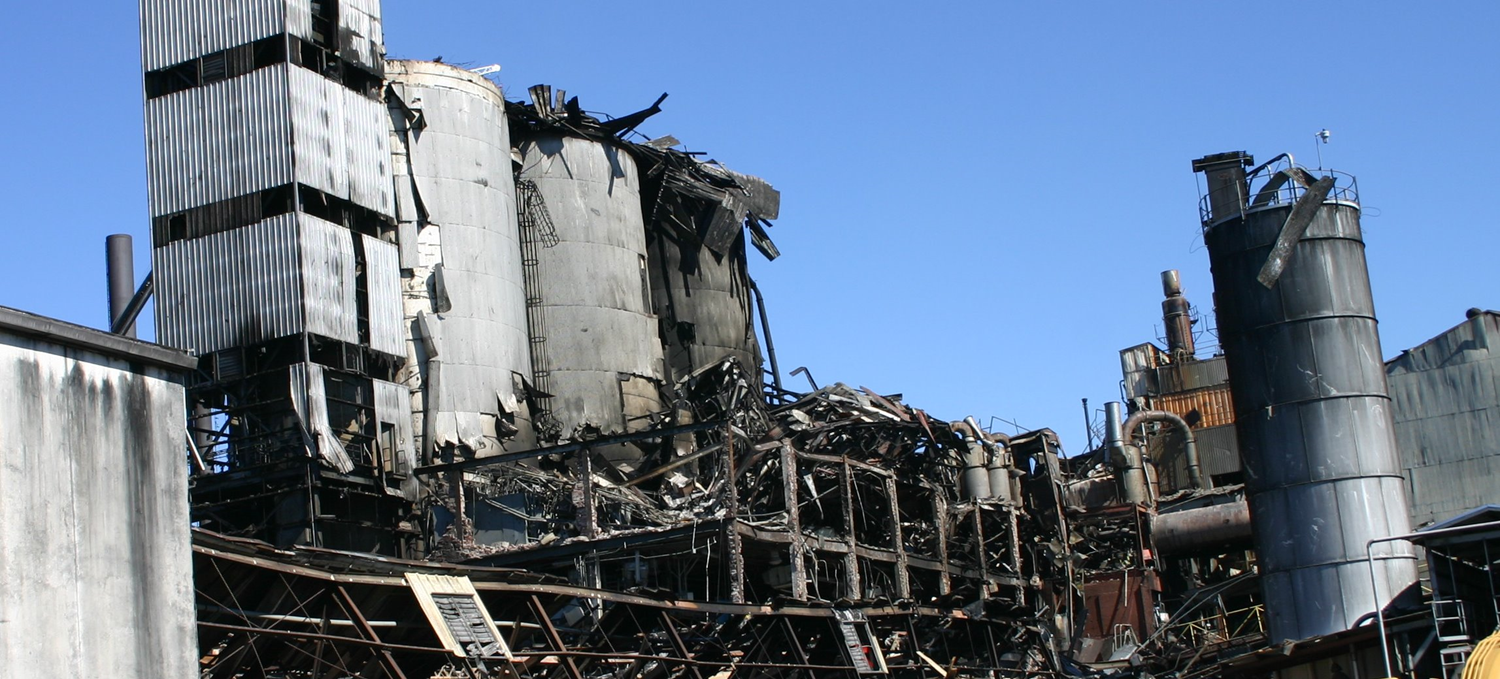
One key point we emphasized in the paper is the dual-stage nature of most significant dust explosions. A small primary event—often inside a piece of equipment like a filter or transfer line—can loft layers of accumulated dust into the air, setting the stage for a much larger and far more dangerous secondary explosion. That’s where we see the real devastation. In several incidents I’ve studied or been briefed on, the secondary blast has traveled through process areas, igniting dust layers in multiple rooms or areas and escalating the damage exponentially. These are the scenarios that destroy buildings and take lives.
Understanding the materials involved is critical. Combustible dust hazards aren’t limited to wood or grain products; many metal dusts, plastic resins, and even food ingredients like powdered milk or sugar can pose explosion risks. What makes a dust dangerous is often its particle size, moisture content, and how easily it becomes airborne. Fine, dry particles with a high surface area ignite quickly and burn intensely. In the metals industry—where I spent much of my early career—we routinely worked with aluminum, chromium, manganese, and silicon dusts that could ignite with a static discharge or overheated surface if not properly managed. Later in my career I also managed materials in dust form such as wielding fume, coal and related substances, graphite, and polymers.
Another important lesson I’ve learned through years of managing combustible dust risks across multiple facilities—often producing what appeared to be the same materials—is that no two dusts are truly alike. Even when the base material is chemically identical, variations in processing methods, particle size distribution, moisture content, and surface area can result in significant differences in ignition sensitivity, deflagration severity, and explosibility. I’ve seen firsthand how assumptions based on “similar” materials from different sites can lead to dangerously flawed risk assessments.
That’s why it is absolutely critical to characterize each site-specific dust using standardized testing protocols—most importantly, per ASTM E1226, which defines how to measure key parameters like the maximum explosion pressure (Pmax) and maximum rate of pressure rise (dP/dt). These aren’t just technical details—they’re the backbone of sound combustible dust hazard analysis. And to get valid, actionable data, the tests must be performed using a 20-liter sphere apparatus, which is the recognized standard test chamber for dust explosibility. While smaller devices (like the 1-liter Hartmann tube) may provide general indications, only the 20-liter sphere delivers the accuracy and repeatability needed for engineering design and safety decisions.
Using the correct test method is just as important as conducting the test itself. If you’re basing your hazard analysis or explosion protection strategy on unverified or low-fidelity data, you’re essentially flying blind. This is especially critical when designing deflagration venting, suppression systems, or isolation barriers—any of which depend on having a reliable Pmax and Kst value derived from the 20-liter sphere.
And this isn’t a one-time check-the-box task. Any significant change in the process—raw materials, equipment, throughput, or even housekeeping practices—should trigger a formal Management of Change (MOC) review. That review must include a reassessment of combustible dust hazards, and, where applicable, retesting of the dust to identify any shift in its ignition or explosion characteristics. I’ve seen cases where a small change in the grinding process or drying temperature created dust with dramatically more reactive properties.
Combustible dust management is not about memorizing the properties of a material—it’s about staying vigilant to how those properties can shift, and building systems that recognize, test, and respond accordingly. That vigilance starts with getting the science right.
In the paper, Dale and I discussed the importance of lab testing to characterize dust behavior. You can’t manage what you don’t understand. Parameters like Minimum Explosible Concentration (MEC), Minimum Ignition Energy (MIE), and Kst (a measure of explosion severity) tell you how easily your dust will ignite and how violently it will burn. A dust with a high Kst value—especially in the St-2 or St-3 range—demands aggressive controls, both in terms of equipment design and operational discipline.
Ignition sources often go unnoticed until it’s too late. It doesn’t take an open flame to trigger an event. I’ve seen or investigated situations where hot bearings, friction sparks, or even a spontaneous static discharge in a duct system led to an explosion. The risk is compounded in systems that transport dust over long distances—like pneumatic conveyors or central vacuum systems—because ignition can occur upstream and propagate rapidly downstream if isolation is inadequate.
The core message I’ve tried to reinforce throughout my career—and that Dale and I made clear in the paper—is that dust explosions are preventable. These aren’t random acts of nature. They are the result of known physical conditions that, if allowed to develop unchecked, will eventually align and cause harm. When we understand the science, commit to testing and analysis, and apply sound engineering principles, we can break the chain of events before it leads to an explosion. That’s the real takeaway: dust explosion prevention isn’t about luck—it’s about doing the work, understanding the hazards, and implementing reliable, system-based controls.
Assessing Acceptable Accumulation Levels
Determining an acceptable level of dust accumulation requires a risk-based approach that considers both the nature of the dust and the context in which it is present. The commonly cited benchmark—1/32 inch (0.8 mm) of dust over more than 5% of the floor area—is drawn from NFPA 654 and should be seen as a minimum action threshold, not a definitive safe limit. This threshold is particularly conservative for low-density dusts (bulk density <75 lb/ft³), which can reach explosible airborne concentrations even at relatively thin layer depths.
Key assessment factors include particle size distribution, moisture content, ignition sensitivity, and the tendency of the dust to become airborne. Fine, dry particles with low minimum ignition energy (MIE) pose the greatest threat. The particle size distribution is also a factor. Generally speaking, the finer the dust, the greater the ignition hazard. Another rule of thumb I use is that dusts with a high fraction of 150 mesh (Tyler sieve) and lower need to be evaluated for combustibility. Additionally, environmental conditions such as airflow, vibration, and human or machine activity can disturb settled dust, making it easily suspendable in the air.
The surface on which dust accumulates also matters. Dust on elevated or hidden surfaces—beams, rafters, piping, light fixtures—can go unnoticed and uncleaned for extended periods. These areas pose a high risk for secondary explosions if the dust is later dislodged and ignited by an initial event. Risk increases significantly if fugitive dust is allowed to accumulate in or around ventilation ducts, enclosures, or process equipment.
To measure dust accumulation, a variety of tools and techniques are available. Depth gauges, dust combs, and rulers can provide quick field estimates of layer thickness. More precise methods include collecting a known volume of dust with a scoop and weighing it to determine bulk density. This allows for a more accurate estimation of the potential airborne dust concentration. Surface area calculations should be performed to determine what percentage of the total room or equipment area is affected. These measurements should be documented and repeated periodically to identify trends and determine the effectiveness of dust control measures.
Visual indicators can also play a role. For example, if the surface color is obscured or if a finger swipe leaves a clear trace in the dust, this often indicates that dust has exceeded the 1/32-inch threshold. However, visual cues are subjective and should not replace quantitative measurements when making decisions about hazard level.
A comprehensive Dust Hazard Analysis (DHA), as required by NFPA 652, integrates all these data points to provide a complete picture of the combustible dust risk in a facility. A DHA includes an inventory of all combustible dust-producing processes, identification of potential ignition sources, analysis of containment or confinement factors, and a review of current housekeeping and mitigation systems. From this, site-specific acceptable accumulation levels can be established and aligned with a hierarchy of controls to manage risk effectively.
Prevention and Mitigation Strategies
In our paper, Prevention and Control of Dust Explosions in Industry, Dale Machir and I emphasized that engineering controls are the foundation of any truly effective combustible dust prevention strategy. While administrative controls like training and housekeeping play important roles, they should be viewed as secondary layers of defense. The real key lies in how the system is designed from the start—because once dust escapes into the general work environment, the risk profile increases dramatically and your margin for error narrows.
Local exhaust ventilation (LEV) should be installed as close to the point of dust generation as possible. Capturing dust at the source—before it can migrate to surfaces or become airborne—is one of the most effective ways to prevent accumulation and dispersion. Too often, I’ve seen systems that rely on general dilution ventilation or distant collection points, which are simply not sufficient for high-risk dusts.
We also highlighted the critical role of deflagration venting, particularly in enclosed vessels or dust collectors. These vents are engineered to relieve internal pressure in the event of an explosion, minimizing structural damage and reducing the risk of injury to personnel. Proper vent sizing, duct routing, and positioning relative to occupied areas are essential design considerations. It’s not enough to simply install a vent panel and assume the system is protected—there must be a documented basis for its performance, ideally supported by dust testing data and compliant with NFPA standards.
For systems involving pneumatic transport of dust, particularly over long distances or between process zones, spark detection and suppression is another key layer of protection. These systems monitor for thermal anomalies or sparks within the conveying line and activate suppression agents or system shutdown protocols before ignition sources can reach a dust collector or silo—where an explosion could easily propagate.
Equally important is the design of the dust collection system itself. A properly engineered dust collector must do more than just move material—it must prevent leakage, control static buildup through proper grounding and bonding, and include explosion isolation mechanisms such as chemical suppression, fast-acting valves, or rotary airlocks. In addition, dust collectors must be equipped with appropriately sized explosion vent panels or flameless venting devices that are designed to safely relieve internal pressure during a deflagration. These vents should be located to discharge to a safe area away from personnel and critical equipment, and should be installed in accordance with the collector’s tested design parameters. Without proper venting, the collector becomes a pressure vessel during an explosion event—potentially turning a localized incident into a catastrophic failure.
A poorly maintained or incorrectly specified collector is one of the most common points of failure in dust control systems.
That said, housekeeping still matters—greatly. It must be frequent, systematic, and verifiable, especially in elevated or concealed areas where dust can settle unnoticed. However, we were clear in the paper that housekeeping should never be relied upon as the primary control strategy. If you’re constantly cleaning up dust that’s escaping from process equipment, that’s not a control measure—that’s an indicator of a failed system design. The goal should always be to prevent the dust from escaping in the first place, through effective containment, enclosure, and point-source control.
We called attention to the importance of training, maintenance, and change management as integral parts of the combustible dust control system. Workers need to understand not only the visible risks of accumulated dust but also the invisible ones—like static energy or poor duct routing. Maintenance teams should be trained to recognize compromised seals, worn gaskets, or ungrounded components. And critically, every process modification—whether it’s a change in material, a layout shift, or new equipment—should trigger a combustible dust impact review. If that review isn’t built into the facility’s Management of Change (MOC) system, you’re flying blind.
Finally, we emphasized that emergency management is an essential—yet often underdeveloped—component of a comprehensive combustible dust safety strategy. Too often, facilities focus heavily on engineering controls and housekeeping, while overlooking the need to prepare for the possibility of an event. We advocated for site-specific emergency response plans that recognize the unique characteristics of dust explosions, including the potential for secondary explosions, intense thermal energy, and blast pressures that can compromise structural integrity. We recommended that emergency response planning include coordination with local fire departments and emergency services, clear protocols for evacuation and accountability, and training for personnel on how to respond safely without inadvertently creating additional hazards—such as dispersing accumulated dust while attempting to intervene. A well-informed and well-rehearsed response team is critical because, in a dust incident, seconds matter. While prevention remains the primary objective, effective emergency preparedness is a necessary safeguard when all other layers of protection are tested.
If you’d like to dive deeper into the fundamentals and real-world lessons behind combustible dust prevention, I encourage you to read the paper Dale Machir and I co-authored on the topic. It covers both the science and the practical strategies we’ve applied in industrial environments. You can access the full paper here: Prevention and Control of Dust Explosions in Industry.
If you are looking to go even further in the understanding and effective management of combustible dust hazards, this book is highly authoritative: Dust Explosions in the Process Industries, by Rolf Eckoff.
At the end of the day, preventing combustible dust explosions is not about any one control—it’s about integrating engineering, operations, and organizational discipline into a cohesive system. That was the core message of our paper, and it remains just as relevant today as when we first wrote it.
Spreading the Word on Combustible Dust Hazards and Control
I still perform training on the topic of dust explosions prevention and control to continue to make industrial organizations aware of the risk and the control methods. When I started my career in the industrial safety field, dust explosion knowledge was still very low for most safety professionals. My time with a company that had managed the hazards for decades gave me a wonderful opportunity to fully learn the science and practical management actions for this unique area of knowledge. An example of the training I typically provide is given in the presentation at this link: Example Combustible Dust Training Material by Chet Brandon
Dale and I developed a demonstration device to visually illustrate the fundamental principles of dust explosions, inspired by the original Hartmann Tube used in early combustible dust testing. Our version was a simplified cylindrical chamber equipped with an ignition source and a method to uniformly disperse dust particles into a suspended cloud. What made it especially effective for educational purposes was the visual demonstration of explosion pressure—a thick paper “vent” sealed the top of the tube and would burst outward upon ignition, mimicking a deflagration vent panel. The simplicity of the setup makes it a powerful teaching tool, especially for audiences new to the topic. I still have the device today and occasionally use it during presentations to help drive home the physics behind combustible dust hazards. You can see a video of it in action in one of my presentations: Hartmann Demonstration by Chet Brandon
I’m also encouraged that the National Fire Protection Association (NFPA), through the development of NFPA 652: Standard on the Fundamentals of Combustible Dust, captured and codified many of the core principles that Dale and I—and many others in this field—have emphasized over the years. This standard provides a foundational framework for hazard identification, Dust Hazard Analysis (DHA), and risk-based control strategies, helping to bridge the gap between theory, practice, and regulation. I conducted training on this NFPA Combustible Dust standard several years ago. You can view that material here: The Combustible Dust Threat by Chet Brandon
Note: In 2024 the NFPA combined several of it’s combustible dust related standards, including 652, into one new standard: NFPA 660, Standard for Combustible Dusts and Particulate Solids (2025). It was published in December of 2024.
Conclusion and Practical Takeaways
Combustible dust hazards remain one of the most underestimated risks in industrial operations, yet they are entirely preventable with the right combination of technical understanding, disciplined controls, and organizational commitment. Over the years, I’ve seen firsthand the consequences of both strong and weak dust management systems—and the difference often comes down to leadership, culture, and follow-through. Prevention is not just a function of engineering and housekeeping—it’s a mindset that must be built into design, operations, maintenance, and emergency preparedness.
I’m proud to continue sharing this knowledge, not only because of where I started in this field, but because I’ve seen how powerful it is when teams truly understand the science and the stakes. We owe it to our workers, our communities, and our profession to treat combustible dust as the serious hazard it is—and to manage it with the same rigor we apply to any other major industrial risk.
Stay safe, stay informed—and don’t let dust settle on your safety program!