
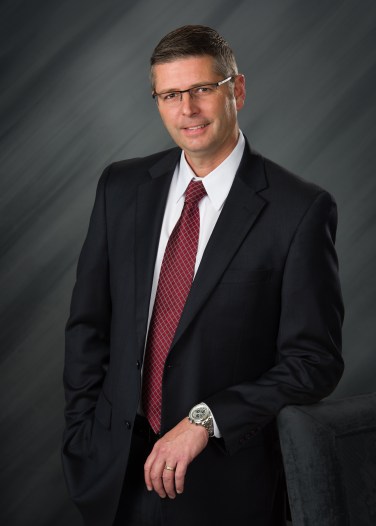
Chet Brandon is a global Environmental, Health and Safety (EHS), Sustainability, Product Stewardship, Regulatory Affairs, Operational Integrity, and Enterprise Risk executive with more than 30 years of leadership experience in complex industrial organizations.
His career spans specialty chemicals, aerospace, metals, glass, automotive manufacturing, advanced materials, electronics, industrial services, and occupational health. He has led global and multi-site organizations across the United States, Europe, Canada, Mexico, Brazil, Australia, and Asia, with responsibility for EHS strategy, occupational safety and health, environmental compliance, sustainability, product stewardship, chemical regulatory affairs, industrial hygiene, hazardous materials, transportation safety, operational risk, and digital transformation.
Brandon is the founder and author of LeadingEHS.com, where he explores the future of EHS and sustainability leadership, including artificial intelligence in occupational safety and health, serious injury and fatality prevention, operational integrity, human performance, enterprise risk management, digital twins, predictive analytics, sustainable operations, and the changing role of the EHS executive.
EHS, Sustainability and Operational Leadership
Throughout his career, Brandon has focused on moving EHS and sustainability beyond traditional compliance programs and integrating them into business strategy, operational excellence, enterprise risk management, and executive decision-making.
He has led EHS and sustainability functions within global manufacturing organizations ranging from specialty chemicals and high-hazard metals operations to aerospace manufacturing and industrial services. His work has included global EHS strategy, serious injury and fatality prevention, process and occupational safety, environmental compliance, sustainability and decarbonization, product stewardship, chemical regulatory compliance, management systems, industrial hygiene, hazardous materials management, transportation safety, mergers and acquisitions, capital-project risk, organizational development, and Board-level reporting.
His executive leadership experience includes organizations and businesses associated with Hexion, GrafTech International, Special Metals/PCC, Honeywell Aerospace, Beechcraft/Textron Aviation, Owens-Illinois, Hendrickson International, and ATI Worksite Solutions.
A consistent theme across this work has been the integration of people, operating systems, technology, and leadership to create performance that is both measurable and sustainable.
Artificial Intelligence and the Future of EHS
Brandon has become a nationally recognized contributor to the discussion surrounding artificial intelligence in EHS and occupational safety and health.
His work examines how AI, predictive analytics, digital twins, large language models, computer vision, connected-worker technologies, and advanced data analytics can help organizations identify risk earlier, improve decision-making, strengthen critical controls, and extend professional expertise across large organizations.
A central theme of this work is Human + AI collaboration: using artificial intelligence to augment professional judgment rather than replace it.
He has contributed to the American Society of Safety Professionals’ work on artificial intelligence and occupational safety and health and received the ASSP President’s Award for work related to artificial intelligence and the future of occupational safety and health.
His research and writing on LeadingEHS have introduced and developed concepts including the Executive Digital Twin, Inherited Risk Ecosystem, AI-supported EHS decision-making, EHS data-analysis heuristics, process digital twins, organizational learning systems, and the responsible integration of AI into safety management.
Operational Integrity, SIF Prevention and Human Performance
Much of Brandon’s recent work focuses on the evolution of traditional safety management toward Operational Integrity.
This approach connects occupational safety, process safety, human performance, serious injury and fatality prevention, engineering controls, operational discipline, organizational learning, and enterprise risk management.
His Inherited Risk Ecosystem concept examines how decisions made upstream in design, engineering, staffing, maintenance, planning, leadership, and organizational systems can create or amplify risk long before an employee encounters it at the point of work.
His work on serious injury and fatality prevention similarly emphasizes identifying high-consequence exposures, recognizing weak signals and precursors, verifying critical controls, and designing operating systems that remain resilient under changing conditions.
Sustainability and Sustainable Operations
Brandon’s sustainability experience is grounded in industrial operations.
He has led and supported initiatives involving greenhouse-gas reduction, Scope 1, Scope 2 and Scope 3 emissions, energy efficiency, renewable energy, decarbonization strategy, product life-cycle analysis, science-based climate targets, sustainable manufacturing, ESG reporting, sustainability ratings, supply-chain sustainability, and the integration of environmental performance into capital and operating decisions.
His perspective on sustainability emphasizes the connection between environmental performance and the systems that actually run industrial companies: manufacturing technology, energy, raw materials, supply chains, capital allocation, product design, operational efficiency, and leadership decisions.
Executive Leadership and Developing Organizations
Brandon’s work extends beyond technical EHS and sustainability programs to organizational design and leadership at scale.
During one period of his career, he helped grow an industrial occupational-health and services organization from approximately 15 employees to roughly 300 while revenue increased from approximately $7 million to $36 million. That experience helped shape his approach to leadership systems, delegation, organizational learning, management routines, talent development, and scaling professional expertise.
He writes frequently about how leaders create organizations capable of performing without requiring the executive to personally manage every decision.
For Brandon, effective EHS leadership is ultimately a business leadership discipline: translating risk, technical complexity, workforce capability, sustainability, technology, and operating performance into decision-ready information and accountable action.
Professional Leadership, Speaking and Industry Contribution
Brandon has held national leadership roles with the American Society of Safety Professionals (ASSP) and has served in executive, government affairs, nominations and elections, regional leadership, and artificial-intelligence initiatives within the Society.
He is a frequent speaker and panelist on artificial intelligence, digital transformation, EHS leadership, serious injury and fatality prevention, operational integrity, technology, and the future of occupational safety and health.
His recent professional engagements have included ASSP’s national Safety conference, executive safety forums, technology and AI panels, webinars, podcasts, and industry conferences.
He also serves in advisory roles involving EHS technology, artificial intelligence, sustainability, and professional education.
Education and Professional Credentials
Brandon holds a Bachelor of Business Administration in Economics, a Master of Science in Safety Technology, and a Master of Arts in Industrial/Organizational Psychology from Marshall University.
He is a Certified Safety Professional (CSP) and Certified Hazardous Materials Manager (CHMM).
This combination of business, economics, safety engineering and organizational psychology has shaped his approach to EHS leadership: technical systems matter, but sustainable performance ultimately depends on how people, organizations, technology, incentives, and operating systems interact.
About LeadingEHS
LeadingEHS.com is Chet Brandon’s professional platform for exploring emerging ideas in environmental, health and safety, sustainability, operational integrity, enterprise risk, leadership, and technology.
The site focuses particularly on issues shaping the next generation of industrial EHS leadership, including:
Artificial intelligence in EHS and occupational safety and health; Human + AI collaboration; serious injury and fatality prevention; operational integrity; human performance; enterprise risk management; digital twins and predictive analytics; EHS data analytics; organizational learning; sustainable manufacturing; decarbonization and Scope 3 emissions; contractor safety; EHS management systems; executive leadership; and the future of the EHS profession.
LeadingEHS is intentionally a professional workshop as well as a publishing platform. Ideas developed here often begin with a practical problem encountered in industrial operations and then examine how emerging technology, research, management science, and leadership practices might produce a better solution.
The objective is not simply to describe where the EHS profession is today, but to explore where it can go next.
Research, Writing and Use of Artificial Intelligence
Artificial intelligence and large language models are used selectively in the research and development of LeadingEHS content.
Generative AI may assist with research, drafting, structural organization, editing, and refinement. The underlying concepts, professional interpretation, technical judgment, synthesis, source evaluation, conclusions, and final editorial decisions remain those of the author.
This Human + AI approach reflects one of the central ideas explored throughout LeadingEHS: the greatest value of artificial intelligence emerges when technology expands human capability while professional judgment and accountability remain firmly in the loop.
Advisory, Speaking and Consulting
Chet Brandon is available for selected executive advisory, speaking, professional-development, and consulting engagements involving EHS leadership, sustainability, operational integrity, artificial intelligence in EHS, enterprise risk, organizational development, and the future of occupational safety and health.
For professional inquiries, contact Chet through LeadingEHS or connect with him on LinkedIn.
Ideas and opinions expressed on LeadingEHS.com are those of the author and do not represent those of his employer.
© 2014–2026 Chet Brandon / LeadingEHS.com. All rights reserved.

