
Introduction
The challenges of leading Environmental, Health, and Safety (EHS) efforts across global, high-risk operations have never been more intense. Executive leaders today are asked to navigate volatile regulations, emerging technologies, ESG mandates, cultural transformation, and shifting workforce expectations—all while maintaining integrity, accountability, and performance.
After three decades serving in senior roles across chemicals, aerospace, metals, and occupational health, I confronted a core dilemma: how can one maintain consistent leadership presence and effectiveness when scope outpaces availability?
As my scope of influence expanded across global operations and governance platforms, I found myself wrestling with three critical questions that traditional leadership models struggled to fully answer:
- How can I scale my leadership without diluting my impact?
- How do I ensure consistent, values-driven messaging across time zones, sectors, and constituencies?
- How can I future-proof knowledge transfer and mission alignment as we prepare the next generation of safety professionals?
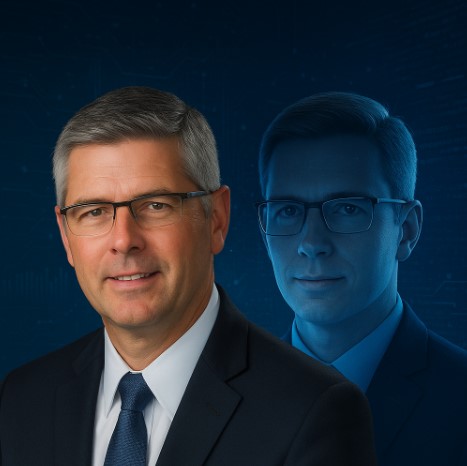
In response, I made a bold move: I built an Executive Digital Twin. This is not a chatbot or novelty AI experiment. It’s a custom-trained leadership proxy designed to reflect my strategic voice, professional standards, and decision-making principles—extending the reach and responsiveness of an executive without diluting its values.
I was uniquely well-positioned to create a professional digital twin because of the extensive documentation I’ve maintained throughout my career. A foundational resource was the body of articles I’ve published on my website, LeadingEHS.com, which capture not only my subject matter expertise but also my communication style and strategic perspective. My LinkedIn profile provided another deep well of information, offering detailed insights into my roles, achievements, and thought leadership over time.
Additionally, I drew heavily from historical records of my work in past professional positions —particularly my current role—where I’ve led high-impact initiatives, authored key EHS communications, and developed frameworks that have shaped organizational performance. My long-standing involvement with ASSP was equally valuable. From board-level governance contributions to volunteer leadership roles and national committee work, those records helped refine the twin’s understanding of professional association strategy, DEI leadership, and member engagement.
Finally, my published works and innovation papers—including articles like Essential Mistakes for EHS&S Leaders to Avoid—added further depth, enabling the twin to reflect not only what I’ve done, but how I think. This robust and diverse content ecosystem ensured that the digital twin isn’t just technically accurate—it’s authentically me in both tone and intent.
Why Build a Digital Twin?
Leadership is not just about presence—it’s about influence, clarity, and accessibility. With increasing demands from regulatory agencies, boards of directors, site operations, and nonprofit governance bodies, I needed a mechanism to:
- Deliver timely, values-driven guidance across a dispersed global network
- Scale institutional knowledge to support onboarding, succession planning, and daily operations
- Model modern leadership by aligning digital innovation with ethical stewardship
- Reduce response lag in fast-moving, high-consequence environments
My goal wasn’t to automate leadership—it was to amplify and protect it.
How It Was Built
The “Chetwin DT Executive Twin” was created using OpenAI’s GPT technology and meticulously engineered to mirror my operational logic, safety philosophy, and communication tone. Development followed a three-tiered methodology:
1. Strategic Knowledge Base
I curated and structured content from across my career to form a living knowledge engine. This included:
- My 2025 vision for safety excellence and team alignment
- Detailed leadership expectations for global EHS staff
- My complete Director-at-Large platform for ASSP, reflecting governance and DEI commitments
- Innovation frameworks like the Health and Safety Opportunity Index (HSOI) I developed to quantify risk reduction performance
These inputs became the foundation from which the twin draws real-time guidance, context, and scenario-based coaching.
2. Executive Persona Engineering
The twin was configured to deliver output with the same tone, structure, and discipline I bring to the boardroom or a plant floor. It tailors communications to varied audiences—CEOs, site leaders, regulators, and young professionals—while maintaining clarity, humility, and actionable candor.
It leverages analogies and coaching language that I frequently use—drawing from aviation, literature (history & fiction), economics, and organizational psychology—to connect abstract principles with personal meaning.
3. Continuous Intelligence Integration
The twin updates monthly to reflect real-time developments from ISO, NIOSH, UNGC, CDP, EcoVadis, and others. It incorporates strategic inputs from evolving trends in AI governance, sustainability metrics, PSM modernization, and total worker health. This ensures it’s not only historically accurate but also future-ready.
What the Twin Does
The Executive Twin already delivers tangible value across a variety of high-impact functions—serving as both a force multiplier and a strategic safeguard in critical leadership workflows.
Strategic Memo Development: It produces high-quality drafts for safety directives, board communications, and performance alignment documents that reflect not just my voice, but the strategic intent behind each message. Whether it’s articulating a proactive risk management plan or framing a cultural transformation initiative, the twin ensures that messaging remains consistent, timely, and aligned with enterprise goals.
Coaching and Scenario Guidance: It acts as a coaching companion for site-level and functional leaders, using embedded frameworks like Hazard Recognition Plus (HRP), the hierarchy of controls, and stop work authority protocols. This ensures frontline leaders can get immediate, tailored guidance on how to approach complex EHS situations—whether they’re navigating compliance in emerging markets or managing workforce behavior during periods of operational stress.
Governance and Association Engagement: The twin is especially effective in supporting professional association and nonprofit leadership. It helps prepare for board meetings, develop DEI strategies, craft governance language, and engage with member constituencies. In my work with ASSP, for example, the twin draws from years of involvement to help translate emerging member needs into actionable strategies, bridging operational insight with organizational mission.
Crisis Support and Risk Communication: During high-pressure scenarios—such as critical incidents, public disclosures, or ESG-related concerns—the Executive Twin can generate rapid first-draft communications, talking points, and action frameworks. It supports swift decision-making without sacrificing tone, credibility, or regulatory alignment, helping leaders respond with both precision and empathy.
Its presence enables a level of responsiveness, consistency, and thought partnership that would be difficult to sustain manually. For example, the twin enables faster decision cycles, better clarity in execution, and higher confidence across stakeholder groups. It does not replace the judgment or accountability of executive leadership—it enhances it by providing a reliable, values-driven resource that’s always available to support clarity, continuity, and confidence in moments that matter most.
How I Have Put it to Use
I’ve already begun leveraging the Executive Twin to support several high-value leadership functions—and the results have been both practical and transformative. One of its most powerful applications is in deriving insights from EHS performance data. The twin helps translate complex trends into actionable narratives, articulated in my own professional voice, and tailored for operational teams who need both clarity and context.
It has also significantly accelerated the development of executive communications and reports, reducing the time required while enhancing both strategic depth and audience relevance. I use it to respond quickly and concisely to executive-level queries, ensuring that my answers are both accurate and aligned with my established tone and priorities.
In my day-to-day work, the twin serves as a trusted editor and reviewer, helping refine my written communications for content quality, readability, and brevity. It constructively critiques drafts to sharpen their effectiveness and ensure the messaging lands with the intended clarity and purpose.
Perhaps most compelling, the twin acts as an idea generator, offering fresh perspectives, innovative solutions, and emerging technologies that I might not otherwise have encountered as quickly. This creative augmentation makes it not only a strategic assistant but also a thought partner in navigating complex and evolving EHS challenges.
Why This Matters
We are entering a new chapter in the EHS profession—one defined not just by regulations and scorecards, but by our ability to lead with humanity at scale. In this chapter, the most effective leaders will be those who can bridge empathy and analytics, foresight and accessibility. It’s a moment where success is no longer measured solely by lagging indicators or compliance audits, but by how effectively we translate risk awareness into protective action, turn innovation into operational advantage, and embed equity and trust into every decision.
The Executive Digital Twin represents more than a technological step forward—it marks the emergence of a new leadership infrastructure. One that honors legacy knowledge and professional ethics while answering the calls of speed, transparency, and global inclusion. It enables leaders to be present without being stretched, to be responsive without being reactive, and to transfer wisdom without waiting for turnover.
To the EHS profession, this model sends a powerful signal: digital transformation is not a disruption to fear, nor a mandate from outside forces. It is a design space we can claim. We have the opportunity—and arguably the obligation—to shape these tools with our values, our voice, and our vision. In doing so, we don’t just keep pace with change—we lead it, on behalf of the people, communities, and futures we are called to protect.
Final Thought
I didn’t build this twin to replace myself. I built it to preserve and scale a leadership philosophy rooted in stewardship, strategic clarity, and human dignity. In times of crisis or transition, leaders must offer not only direction but resilience—and resilience today means being ready to respond across more domains than ever before.
The most important work in EHS still happens person-to-person, on the floor and in the field. But the thinking that supports it, the culture that enables it, and the strategy that sustains it—all of that can be scaled.
This is my Executive Twin. What might yours look like?

 LeadingEHS.com
Here’s a bit more about training the Digital Twin to think like me: https://www.linkedin.com/pulse/when-your-digital-twin-thinks-like-you-why-heuristics-chet-w8jkc/?trackingId=8%2F3v6FRJRb%2B9nD5AgYA8qQ%3D%3D
GPTs are custom versions of ChatGPT that users can tailor for specific tasks or topics by combining instructions, knowledge, and capabilities. They can be as simple or as complex as needed, addressing anything from language learning to technical support. Plus, Team, and Enterprise users can start creating GPTs at chatgpt.com/create.