
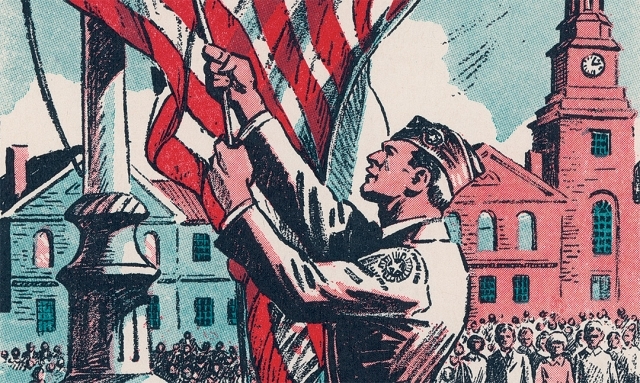
We, as Americans, and as a nation, are not fully living up to the revolutionary ideals upon which our republic was founded. This deeply concerns me, particularly the increasing cynicism among younger generations regarding our nation and their role in it. This perspective, unfortunately, stems from the poor examples set by recent leaders and a distorted understanding of history shaped by the pervasive influence of social media and “influencers” who prioritize views over accuracy.
“Well, Doctor, what have we got—a republic or a monarchy?
A republic, if you can keep it.” –Benjamin Franklin, 1787
With the founding of our country, the Great American Experiment was launched as the bold attempt to create a republic rooted in democratic principles, individual liberty, and self-governance—an unprecedented departure from monarchic rule. Drawing inspiration from Enlightenment ideals and classical influences, the Founders sought to balance power through a written Constitution, checks and balances, and the rule of law, while relying on civic virtue to sustain the system. This experiment remains ongoing, as the United States continues to grapple with the challenges of equality, unity, and the fulfillment of its founding promise of freedom and opportunity for all.
As an avid reader, like many leaders I know, I find inspiration in the lives of individuals who have made profound impacts on our country and the world. My extensive reading on the family of Theodore Roosevelt (TR) has deeply influenced my ideals and philosophies. Recently, during a visit (3rd time!) to the National WWII Museum in New Orleans, I was struck by the severe lack of knowledge about 20th-century events among younger visitors. This experience underscored the vital role museums play in educating future generations about crucial historical lessons. These lessons, often lost over time, highlight the enduring nature of human behavior, the fragility of institutions, and the necessity for vigilance even in times of stability. History, it seems, unfolds not in a straight line but in recurring waves, with the past continually shaping the future. This is referred to as the 100 Year Historical Cycle.
During my visit, I picked up a book about TR Roosevelt’s son, Theodore Roosevelt, Jr., titled “His Father’s Son: The Life of General Ted Roosevelt, Jr.” by Tim Brady. Currently engrossed in this fascinating read, I am drawn to the remarkable life of Ted Roosevelt, Jr. My extensive reading on his father, TR, has significantly shaped my worldview, style, and accomplishments—Bully! This book, coupled with my museum experience, has profoundly influenced my thoughts during this election season. I believe the Roosevelt’s vision of American identity holds essential concepts that have been lost in our national dialogue in the 21st century, much to our detriment. Below is a discussion of these concepts and their relevance to our current situation.
The Roosevelt family’s vision of American identity emphasizes ideals such as integrity, service, and a strong sense of duty to the country. Theodore Roosevelt, Jr., exemplified these principles through his distinguished military career and dedication to public service. These values are integral to fostering a sense of national pride and responsibility among citizens, especially the younger generation. By revisiting and embracing these ideals, we can inspire a renewed sense of purpose and unity in our nation.
The lessons from the past, as highlighted by the Roosevelt family and the historical narratives preserved in institutions like the National WWII Museum, offer invaluable insights into the essence of American identity. These lessons remind us of the importance of integrity, service, and civic duty. By reintroducing these concepts into our national discourse, we can address the current cynicism and foster a more informed and engaged citizenry. This approach is crucial for building a future that honors the revolutionary ideals our country was founded upon and ensures their continued relevance in the 21st century.
What follows is my exploration of our country’s potential and the enduring relevance of Americanism. By adapting to evolving societal expectations, this concept remains a vital philosophy, poised to positively guide Americans in this century and beyond.
The First Principles of the Founders
The structure of the American government embodies a thoughtful fusion of classical principles from Greek democracy and Roman republicanism, as explored in Thomas E. Ricks’ “First Principles.” This book, which I read several years ago, provides crucial insights into the origins and potential of our country. One of the most significant contributions was the separation of powers and checks and balances, directly inspired by the Roman Republic’s system of divided authority. The U.S. Constitution established three branches—executive, legislative, and judicial—to prevent any one branch from dominating. This balance of power was essential to ensure liberty and stability, as seen in Rome’s efforts to safeguard against tyranny.
The Founders’ skepticism of direct democracy also played a critical role. Influenced by the chaos of Greek mob rule, they favored a representative democracy, wherein citizens’ voices would be filtered through elected officials. This principle led to the creation of structures like the House of Representatives, the Senate, and the Electoral College, which were designed to refine public opinion and mitigate impulsive decision-making.
Virtue was another cornerstone of the Founders’ vision. Drawing on Roman and Greek models, they believed that a republic could only succeed if both its leaders and citizens embraced civic virtue, integrity, and dedication to the common good. Leaders like George Washington exemplified this ideal through their actions, such as Washington’s voluntary departure from power after two presidential terms. This emphasis on moral leadership also highlighted the importance of education. The Founders, steeped in classical texts that stressed reason and rhetoric, saw education as vital to cultivating an informed and virtuous citizenry. Figures like Thomas Jefferson promoted institutions of learning to ensure future leaders were prepared for self-governance.
The Founders’ awareness of historical failures also shaped their vision. They learned from the Roman Republic’s collapse, which stemmed from unchecked ambition, corruption, and concentrated power. As a result, they embedded mechanisms like impeachment, term limits, and ethical standards into the Constitution to prevent similar outcomes. The rule of law, another legacy of Roman legal traditions, became a cornerstone of the American system. Codified in the Constitution, the rule of law ensured that all individuals, regardless of status, would be subject to the same legal standards.
Additionally, the Founders were influenced by the idea of a mixed government, advocated by classical thinkers like Aristotle and Polybius. This approach balanced monarchy, aristocracy, and democracy to achieve stability. In the American system, these elements were embodied in the President (monarchic element), the Senate (aristocratic element), and the House of Representatives (democratic element). This careful blending of powers and principles reflected the Founders’ determination to create a stable, enduring republic.
In essence, the American government was shaped by classical principles that emphasized balanced power, virtuous leadership, representation, and the rule of law. The Founders’ deliberate efforts to learn from history—particularly the successes and failures of ancient Greece and Rome—allowed them to craft a system designed to protect liberty and prevent tyranny while fostering civic responsibility and long-term stability.
The Roosevelt’s Concept of Americanism
Americanism as espoused by Theodore Roosevelt and his son, Theodore Roosevelt, Jr., reflected a commitment to civic responsibility, patriotism, moral fortitude, and the belief in American exceptionalism. Both men emphasized the importance of active citizenship, personal sacrifice, and a vigorous national spirit. Below is a breakdown of their views on Americanism and how each articulated it within their roles.
1. Theodore Roosevelt (1858–1919): The Philosophy of Americanism
As the 26th President of the United States, Theodore Roosevelt championed a robust vision of Americanism centered on personal responsibility, national unity, and moral strength. For Roosevelt, Americanism was not simply about claiming loyalty to the country; it was about demonstrating it through action and character.
Key Tenets of Theodore Roosevelt’s Americanism
- Civic Duty and Active Citizenship:
Roosevelt believed that being an American came with responsibilities. Citizens were expected to actively participate in democracy and contribute to the common good.- Quote: “The first requisite of a good citizen in this Republic of ours is that he shall be able and willing to pull his weight.”
- He saw complacency as a threat to democracy and stressed the need for involvement at all levels of civic life.
- Moral Integrity and Character:
For Roosevelt, Americanism was built on strong character, emphasizing honesty, hard work, and perseverance. He rejected those who sought privilege without effort.- Quote: “Americanism means the virtues of courage, honor, justice, truth, sincerity, and hardihood—the virtues that made America.”
- Unity and Inclusiveness:
Roosevelt emphasized a unified American identity that transcended ethnic or racial differences. He rejected hyphenated identities (e.g., Irish-American, German-American) and promoted loyalty to a single, cohesive American ideal.- Quote: “There is no room in this country for hyphenated Americanism… The one absolutely certain way of bringing this nation to ruin would be to permit it to become a tangle of squabbling nationalities.”
- Preparedness and Strength:
A strong military and national defense were central to Roosevelt’s philosophy. He believed that peace could only be secured through strength, famously advocating, “Speak softly and carry a big stick.” - The Strenuous Life:
Roosevelt celebrated the “strenuous life” as a metaphor for Americanism—a life of effort, ambition, and action. He disdained laziness, materialism, and passivity.- He believed Americans had a duty to tackle challenges, both individually and collectively, for the betterment of society and the nation.
2. Theodore Roosevelt, Jr. (1887–1944): Americanism Through Service and Sacrifice
Theodore Roosevelt, Jr., the eldest son of Theodore Roosevelt, embodied the principles of Americanism his father championed but expressed them primarily through military service, leadership, and personal sacrifice.
Key Tenets of Theodore Roosevelt Jr.’s Americanism
- Service to Country:
Like his father, Roosevelt Jr. viewed Americanism as a call to serve the nation selflessly. This was especially evident in his military career. He served in both World War I and World War II, demonstrating a profound sense of duty and leadership.- In World War I, he fought courageously and was recognized for his valor.
- In World War II, as a Brigadier General, Roosevelt Jr. famously landed with the first wave of troops on Utah Beach during D-Day in 1944. Despite his age and arthritis, he insisted on leading his men into battle, exemplifying the ideals of sacrifice and leadership.
- Practical Leadership and Sacrifice:
Roosevelt Jr.’s Americanism was not abstract; it was demonstrated through his actions. He believed leaders must lead by example and be willing to share the burdens of those they commanded.- At Utah Beach, he reportedly said to his men, “We’ll start the war from right here!” when their landing was off course.
- His leadership and courage earned him the Medal of Honor posthumously.
- The Spirit of Self-Reliance:
Like his father, Roosevelt Jr. celebrated individual initiative and personal responsibility. He believed that true Americanism required citizens to act decisively and take ownership of their roles in society, whether as soldiers, workers, or leaders. - Preservation of Democracy and Freedom:
Roosevelt Jr. viewed Americanism as inseparable from the defense of democratic values and freedoms. His military service was motivated by a desire to protect these ideals, particularly in the face of global threats during the World Wars. - Humility and Compassion:
Despite his privileged upbringing, Roosevelt Jr. was known for his humility and connection with ordinary soldiers. He embodied the ideal of servant leadership, always placing the welfare of his men and country above his own.
Theodore Roosevelt’s vision of Americanism centered on civic responsibility, unity, and moral integrity, while Theodore Roosevelt, Jr., took those ideals and brought them to life through personal sacrifice and military leadership. Both men shared a belief in service to the nation, the importance of strength and character, and the necessity of active participation in public life. Their combined legacies reflect an enduring commitment to the values of patriotism, perseverance, and duty that define Americanism.
Could Rediscovering Rooseveltian Americanism Principles Help Heal our County?
Rooseveltian Americanism, as articulated by Theodore Roosevelt and his son, Theodore Roosevelt, Jr., emphasizes unity, civic responsibility, moral integrity, and a shared commitment to the nation’s well-being. These principles are particularly relevant in addressing the current political polarization in the United States. By applying their ideas of national unity, active citizenship, and the strenuous life, Rooseveltian Americanism offers a pathway to bridge divides, reinvigorate democratic values, and promote a sense of shared purpose.
1. Promoting National Unity Over Partisanship
Theodore Roosevelt strongly rejected “hyphenated Americanism”—the division of citizens based on identity or origin—arguing that Americans should embrace a single, unified national identity. In today’s fractured political climate, this principle can be used to encourage Americans to focus on shared values and collective goals instead of partisan divisions.
- Focus on a Shared American Identity: Political leaders and civic institutions can emphasize that, while Americans may hold diverse views, they are all part of a shared national story. Reframing debates as opportunities to work together for the country’s betterment can help reduce tribalism.
- Modern Application: Campaigns, educational programs, and public speeches that highlight shared challenges (e.g., infrastructure, economic opportunity, national security) can promote a sense of unity.
- Roosevelt’s Idea: “The one absolutely certain way of bringing this nation to ruin… would be to permit it to become a tangle of squabbling nationalities.”
- Bipartisanship as a Civic Virtue: Roosevelt’s Americanism calls for leadership that prioritizes country over party. Modern leaders could revive the spirit of cooperation by promoting bipartisan initiatives that address issues affecting all Americans (e.g., healthcare, education, jobs).
2. Civic Responsibility and Active Citizenship
Theodore Roosevelt believed that citizenship carried duties as well as rights. He argued that Americans must engage in public life, contribute to their communities, and hold leaders accountable. In today’s environment, this emphasis on active, informed citizenship can reduce political apathy and rebuild trust in democratic institutions.
- Civic Education: Reviving Roosevelt’s call for an educated citizenry would help counter misinformation and extremism. Schools and public programs can focus on teaching civic literacy, critical thinking, and the importance of civil debate.
- Roosevelt’s Idea: “The first duty of an American citizen is that he shall work in politics.”
- Local Engagement: Encouraging grassroots civic participation—volunteering, attending local meetings, and voting in all elections—can help Americans feel connected to their communities and each other. Rooseveltian Americanism stresses that real change begins with individual action.
- Mutual Accountability: Americans must recognize that democracy requires compromise. Roosevelt’s emphasis on moral integrity demands that citizens engage in respectful dialogue, even with those who hold opposing views.
3. Reinvigorating the Strenuous Life to Overcome Common Challenges
Roosevelt championed the “strenuous life” as a metaphor for collective effort, sacrifice, and resilience. In today’s polarized society, Roosevelt’s idea can inspire Americans to tackle shared challenges with courage and determination, fostering a sense of common purpose.
- Shared National Projects: Large-scale initiatives (e.g., rebuilding infrastructure, combating climate change, improving healthcare systems) can unite Americans around tangible goals that transcend politics. Roosevelt believed in confronting big challenges as a way to strengthen national pride.
- Modern Example: A nationwide project to modernize energy systems or respond to natural disasters could bring people together, much like Americans united during World War II or after 9/11.
- Personal Responsibility and Sacrifice: Roosevelt’s call for individual effort can inspire Americans to look beyond self-interest and contribute to solutions. Promoting civic habits like volunteering, community service, and environmental stewardship can bridge divides at the community level.
- Roosevelt’s Idea: “The man who counts… is the man who is actually in the arena, whose face is marred by dust and sweat and blood.”
- Resilience and Optimism: Roosevelt’s Americanism encouraged Americans to confront adversity head-on and maintain faith in the nation’s ability to overcome obstacles. Leaders today can inspire citizens with a vision of hope, unity, and progress.
4. Moral Integrity and Ethical Leadership
Theodore Roosevelt placed a high value on character and ethics in leadership and public life. Restoring trust in institutions and leaders requires a renewed commitment to moral integrity, transparency, and service.
- Leaders as Role Models: Political and civic leaders can embody Rooseveltian principles by prioritizing truth, decency, and humility in their conduct. Leaders must demonstrate a commitment to the common good over partisan gain.
- Roosevelt’s Idea: “No man is above the law, and no man is below it.”
- Accountability and Honesty: Roosevelt’s disdain for corruption and dishonesty can guide reforms aimed at strengthening democratic institutions. Promoting transparency, ethical leadership, and accountability can rebuild public trust.
- Service Over Self-Interest: Rooseveltian Americanism calls for leaders and citizens alike to serve the nation selflessly. This ideal can inspire young people to enter public service and emphasize governance as a calling, not a career.
5. Emphasizing Common Values and Patriotism
Roosevelt’s patriotism was grounded in love for the country’s ideals—freedom, equality, and opportunity—rather than blind allegiance. Modern leaders can embrace this constructive patriotism as a unifying force.
- Celebrate American Ideals: Public discourse can refocus on the foundational principles that define America—democracy, justice, and opportunity—rather than political differences.
- Symbolic Unity: National holidays, commemorations, and service projects can be used to bring people together and celebrate what unites Americans. Roosevelt often used speeches and public symbols to rally the nation around shared ideals.
- Inclusion in Patriotism: Roosevelt’s belief in national unity requires that all Americans feel seen and valued. Efforts to address inequality and promote inclusion can strengthen the shared American identity.
Call to Action
Rooseveltian Americanism offers a powerful framework for healing political divisions in the United States. By emphasizing national unity, civic responsibility, moral leadership, and a shared commitment to overcoming challenges, these principles can serve as a guide for restoring trust, fostering cooperation, and rekindling a sense of collective purpose. Theodore Roosevelt’s call for the strenuous life and Theodore Roosevelt, Jr.’s example of service remind Americans that their nation’s strength lies in active participation, sacrifice, and a belief in the promise of the American ideal.
Rooseveltian values can bridge divides if embraced as a common, nonpartisan ethos—a vision of Americanism rooted in unity, integrity, and the belief that, together, Americans can meet any challenge.
Closing Thought
As Benjamin Franklin was leaving Independence Hall during the Constitutional Convention of 1787, a woman reportedly asked him, “Well, Doctor, what have we got—a republic or a monarchy?” Franklin’s famous response was, “A republic, if you can keep it.”
This remark underscores the fragile nature of a republic and the responsibility of its citizens to actively preserve it. Franklin’s words reflect the idea that a government based on democratic principles, liberty, and self-rule can only endure if the people remain engaged, vigilant, and committed to upholding its values. It serves as both a warning and a call to action: a republic is not self-sustaining but requires ongoing effort, civic virtue, and accountability from citizens and leaders alike.
What are you doing to meet the challenge of keeping our republic?

 LeadingEHS.com
I’d tried to get people who never vote to cast a vote in the November 2024 election. I failed. These people have not realized our good fortune. I’ve worked at several different volunteer efforts but failed to impact the community in any articulable way. I haven’t gotten any smarter: I keep trying. Thank you for reminding us about the existence of T.R.